
Bangla to English Certified Translation in Australia: Every Bangladeshi Document Explained

Last reviewed: 24 August 2026
Most Bangladeshi families in Australia do not translate one document. They translate a pile. A partner visa file might carry a birth registration record, a Kabin Nama marriage record, a national ID card and a police clearance letter, and every one of those pages arrives in Bangla. The translation work itself is straightforward. The part that decides whether the file moves or stalls is consistency across the whole set, because a case officer reads the pages side by side and notices when one spelling drifts.
What this guide covers
- The six Bangladeshi documents that reach Australian desks most often.
- Why a single translator across a family file protects your name spelling.
- How Bangla script, dates and honorifics behave once they cross into English.
- A page by page preparation checklist before you upload anything.
- Certification wording, delivery formats and current pricing.
A community that translates in batches
Bangla ranks among the fastest growing community languages spoken at home in Australia, and the Bangladesh born population has climbed at every census since 2006. You can see the pattern in the Australian Bureau of Statistics cultural diversity release, which tracks country of birth and language use together. Growth like that changes the shape of the paperwork. Skilled migrants sponsor parents, students shift onto graduate visas, and each move drags an older Bangla record back out of a drawer.
That batching matters more than people expect. A birth certificate translated on its own is a small job. The same certificate translated three years after a marriage record went through a different provider is where the trouble starts, because the two English versions rarely spell the father name the same way.
The six documents we see most
Bangladeshi civil records follow their own layout habits, and each type carries one field that causes more queries than the rest.
| Document | Bangla name | Field that causes queries |
|---|---|---|
| Birth registration certificate | Jonmo Nibondhon Sonod | Seventeen digit registration number and the parent name fields |
| National identity card | Jatiyo Porichoy Potro | Address block written in Bangla only, plus the NID number format |
| Marriage record | Nikah Nama or Kabin Nama | Handwritten registrar entries and the dower amount in words |
| Divorce record | Talaq Nama | Effective date versus notice date |
| Police clearance | Police Clearance Certificate | Validity period and the issuing district |
| Academic transcript | Marksheet and testimonial | Grade scale and board name abbreviations |
Identity documents sit at the centre of that list, and the national card is the one people forget until an officer asks for it. Our page on national ID card translation explains how the address block and card number are handled once the card moves into English.
Name spelling is the real risk
Bangla names travel into English through transliteration, not translation, and transliteration allows choices. Md, Mohammad, Muhammad and Mohammed all render the same Bangla prefix. Chowdhury and Choudhury sit on the same family. Rahman becomes Rehman on a careless day. None of those variants is wrong on its own. All of them become a problem when three documents in one file each pick a different one.
The fix is boring and it works. Decide which spelling your passport uses, send that page to the translator, and let the translator anchor every document to it with a transliteration note where the Bangla source differs. A note explains the variation openly. A silent switch looks like a mismatch.
Four spelling traps worth checking yourself
- Honorific prefixes such as Md and Mst that some officers read as part of the given name.
- Parent names that appear in full on one record and shortened on another.
- Village names that carry an older colonial spelling on pre 2010 documents.
- Dates written in the Bengali calendar beside the Gregorian date.
Who is allowed to certify the translation
A translation completed inside Australia is expected to come from a translator credentialled by the National Accreditation Authority for Translators and Interpreters, known as NAATI. That credential is tested, time limited and renewable, which is why agencies treat it as the shortcut for judging quality. Work completed overseas follows a different rule and must show the translator name, address, telephone number and qualifications in English on the document itself.
Bangla sits inside the certified translator languages, so a genuine Bangla to English credential exists and can be checked. Ask for the practitioner number before you pay, then search it. A provider that hesitates over that question has told you something useful. Our comparison of certified and standard translations sets out what the certification page actually contains and why a plain translation fails at lodgement.
Prepare the pages before you upload
Scan quality decides the pace of the job more than word count does. A phone photo taken at an angle under a ceiling light turns a registrar signature into a smudge, and a smudge becomes a clarification email.
Upload checklist
- Flat colour scan at 300 dpi, taken in daylight if you use a phone.
- Every page including the reverse side, even when it looks blank.
- Correction slips, annexures and stapled amendment notes.
- Passport bio page for the English name anchor.
- Any earlier English translation you already hold, so spellings can be matched.
- One combined file per document rather than loose images.
Where each document ends up
Different receiving bodies care about different things, and knowing the destination changes how the translator formats the file.
| Receiving body | Typical Bangla documents | What they focus on |
|---|---|---|
| Home Affairs visa processing | Birth, marriage, police clearance | Identity consistency across the whole application |
| Citizenship processing | Birth registration, name change records | Unbroken chain between birth name and current name |
| State registry offices | Birth and marriage records | Complete field by field rendering, including seals |
| Universities and skills assessors | Transcripts, testimonials | Grade scale, board name, award date |
| Banks and insurers | NID card, bank statements | Address match against your current identity file |
Cost, turnaround and what shifts them
Pricing here is fixed and published rather than quoted case by case. A Self Service Extract sits at $44.95, an Extract Translation at $59.95 and a Full Translation at $89.95, with certification included in every tier. The choice depends on the receiving body rather than the difficulty of the Bangla.
| Tier | Price | Usual turnaround | Suits |
|---|---|---|---|
| Self Service Extract | $44.95 | From 1 hour | Standard modern birth registration records |
| Extract Translation | $59.95 | 1 business day | Records checked and prepared by our team |
| Full Translation | $89.95 | 1 to 2 business days | Handwritten, annotated or older Bangla documents |
Turnaround times reflect normal workload and are not guaranteed. Handwritten registrar entries, faded municipal stamps and multi page academic sets all sit at the slower end. You can compare tiers and formats on the main certified translation services Australia pages before you decide which one your receiving body needs.
Ordering a Bangla to English translation
- Gather every Bangla document the application asks for and scan the full set in one sitting.
- Pick the tier that matches the receiving body, not the cheapest one on the page.
- Send your passport spelling so names stay anchored across the batch.
- Flag anything handwritten or amended so it reaches a translator who reads older script.
- Review the draft field by field, especially dates and registration numbers.
- Lodge the Bangla scan and the English translation together as the authority instructs.
Frequently asked questions
Which Bangladeshi documents usually need a certified English translation?
Birth registration records, national ID cards, marriage and divorce records, police clearance letters, transcripts and bank papers cover almost every request we receive.
Can one translator handle a whole family file?
Yes, and it is the better option. One translator keeps every parent name and village name spelled the same way across the batch.
Does a Bangla to English translation need NAATI certification?
Work produced inside Australia is expected to carry a NAATI credential. Work produced overseas must show the translator name, address, telephone number and qualifications in English.
How should my name be spelled in the English version?
The translation follows the Bangla source, with a transliteration note added when your passport spelling differs from the printed record.
What does it cost?
Pricing starts at $44.95, moves to $59.95 for an Extract Translation and reaches $89.95 for a Full Translation, certification included.
How long does it take?
From one hour for a Self Service Extract, one business day for an Extract Translation and one to two business days for a Full Translation. None of those are guarantees.
Do I send the Bangla original as well?
Yes. Authorities read the source and the translation as a pair, so a clear scan of the Bangla page goes in beside the English file.
Can a family member translate the documents?
No. The certification statement carries a translator credential and contact details, so a relative or the applicant cannot provide it.
Getting your Bangla documents ready
Treat the translation as part of the application rather than an errand attached to it. Scan the full set, anchor the spelling to your passport, keep one translator across the batch, and read the draft as carefully as the officer will. Bangla to English work handled that way rarely comes back for a second look.
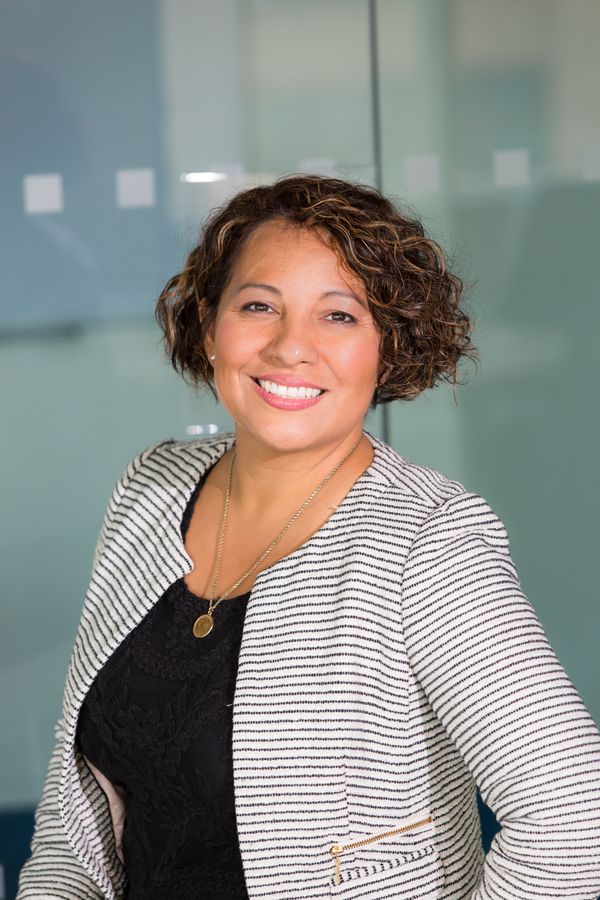
Nusrat Jahan
NAATI Certified Bangla to English Translator
Nusrat Jahan is a NAATI certified Bangla to English translator in Melbourne who handles Bangladeshi birth, marriage and identity records for Australian visa and registry files.